Changelly exchange is an instant crypto swap route for direct-to-wallet trades
In short: Instant cryptocurrency swap platform for trading Bitcoin and 1000+ altcoins, with direct-to-wallet delivery after each exchange.
Changelly exchange is a service for swapping Bitcoin, Ethereum, XRP, ADA, and 1000+ other digital assets without building an order manually on a trading screen. You choose a pair, enter the receiving wallet address, send the deposit, and the exchanged coins are delivered to that wallet after the transaction is processed. Its main appeal is the direct-to-wallet flow, 24/7 live support, broad coin coverage, and rate sourcing through multiple trading platform partners.
The direct-to-wallet swap flow
A swap starts with a sending asset and a receiving asset. A user might choose BTC to ETH, ETH to XRP, SOL to USDT, or another supported pair from the available market list. After the pair is selected, the interface asks for the destination wallet address for the coin being received. That address matters because the service sends the final asset there after the exchange is complete.
Once the order is created, the user receives a deposit address for the asset being exchanged. The transaction moves on-chain from the user's wallet to that address, then the conversion is processed, and the payout goes to the destination address. Changelly exchange is built around this transaction-by-transaction model, so the experience feels closer to a wallet swap than to an exchange account with an open balance.
Where the rates come from during a swap
The quoted rate is drawn from liquidity relationships rather than a single public order book inside the user interface. The service describes its rate search as using partnerships with more than 20 crypto trading platforms to find competitive execution for the selected pair. That matters most for assets with thinner liquidity, where one venue's price creates a worse fill than a broader search across connected markets.
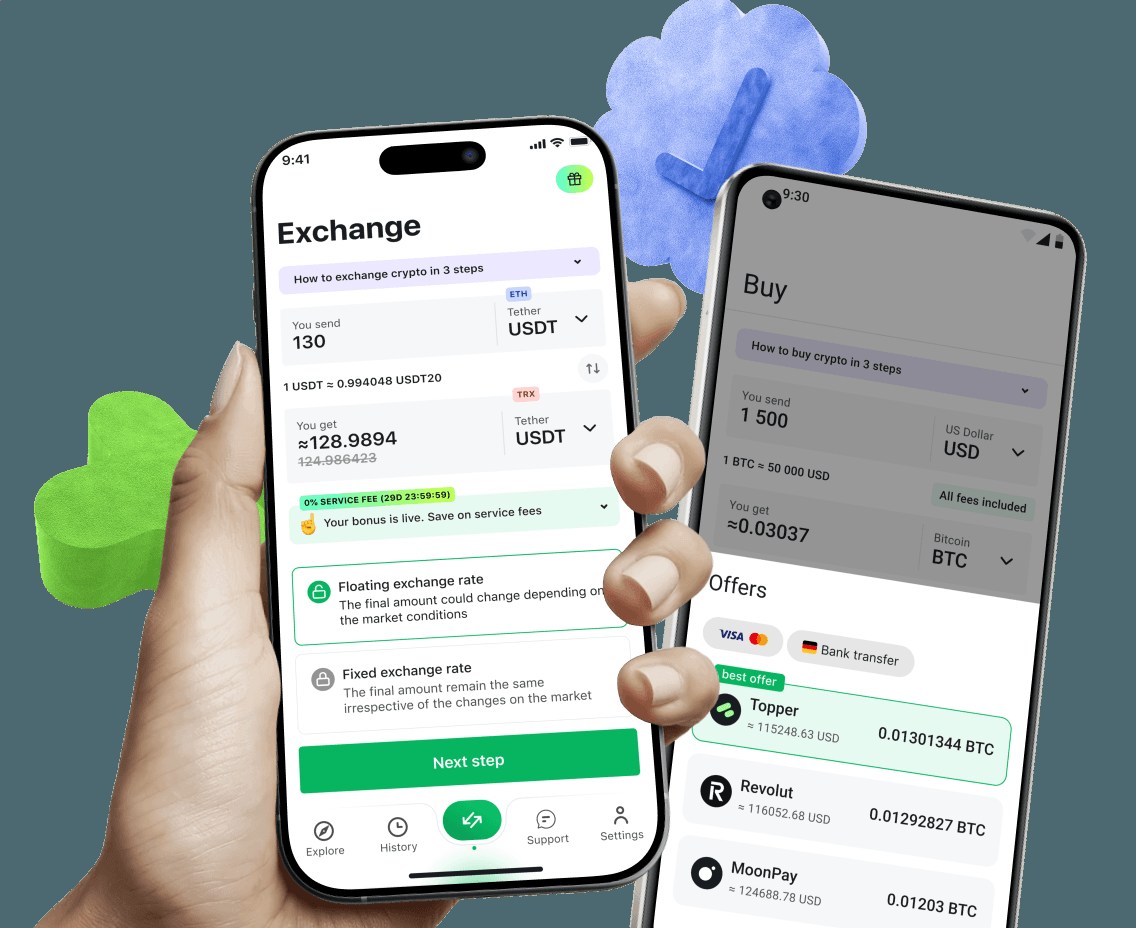
Users see a rate before sending funds, but the type of quote shapes the final result. A fixed-rate order locks the displayed amount for a limited window when the deposit arrives under the order conditions. A floating-rate order follows the market until execution, so the final received amount reflects price movement, network timing, and liquidity at settlement.
Fixed rate and floating rate orders
Fixed-rate swaps suit users who want the received amount to match the quote as closely as the order rules allow. The trade-off is that the quote includes protection against market movement and comes with stricter timing. If the deposit arrives late, arrives short, or uses the wrong network, the order needs support handling or recalculation.
Floating-rate swaps suit users who care more about availability and a live market rate. The displayed amount is an estimate rather than a locked promise. Changelly exchange uses this model for many crypto-to-crypto swaps because blockchain confirmation time and market prices keep moving while the deposit is still traveling.
Assets that fit the service best
The strongest use case is moving between major coins and widely traded altcoins without opening several exchange accounts. Bitcoin, Ethereum, XRP, ADA, stablecoins, and large-cap networks fit naturally because users already hold them in external wallets and expect direct withdrawals. The same flow also works for smaller assets when they are supported, though liquidity, minimum amounts, and network availability decide whether the order is practical.
It is also useful when a wallet user wants to rebalance quickly. Someone holding BTC can move into ETH, a stablecoin holder can rotate into SOL, and an altcoin holder can consolidate back into Bitcoin. Changelly exchange keeps that workflow focused on the pair, destination address, and deposit transaction instead of charts, limit orders, maker fees, and exchange balances.
Buying crypto with a bank card
The service also includes a buy flow for purchasing crypto with a card through integrated payment providers. That path differs from a pure crypto-to-crypto swap because fiat payments bring identity checks, card authorization, issuer limits, and payment-provider rules into the process. The coins still need a receiving wallet address, so the buyer should have a compatible wallet ready before starting.
Card purchases are most relevant for first-time acquisition of assets such as Bitcoin or Ethereum, or for topping up a wallet before a later swap. A failed card authorization, mismatched billing details, or unsupported region stops the purchase before the payout stage. This is the area where requirements differ most from ordinary wallet-to-wallet crypto swaps.
How long a transaction takes
The official flow presents average transaction speed as 5 to 40 minutes. That range is believable because a swap has several moving parts: the sending chain needs confirmations, the exchange route needs execution, and the receiving chain needs a payout transaction. Bitcoin confirmation time, Ethereum congestion, memo requirements on some networks, and payment-provider checks all change the actual wait.
For a new user, the most reliable way to avoid delays is to match the asset and network precisely. USDT on Ethereum is a different route from USDT on Tron, and some assets require a memo, destination tag, or payment ID. A missing tag on XRP-like account systems creates a support case instead of a clean automatic credit.
Support, app access, and everyday usability
24/7 live support is one of the service's central claims, and it matters because an instant exchange still touches irreversible blockchain transactions. The support team handles stuck deposits, wrong amounts, delayed payouts, and order questions. Good support does not remove the need for accurate wallet details, but it gives users a channel when a blockchain transaction has already left their wallet.
The mobile app extends the same exchange idea to iOS and Android users, with language coverage designed for international use. The app is positioned around top rates, deals, and a familiar swap screen. Changelly exchange therefore serves both desktop users who want a simple web form and phone-first users who manage crypto through mobile wallets.
Costs that matter before pressing exchange
The visible quote is only one part of the cost. A complete swap includes the exchange rate, any service fee included in that rate, the sending chain's network fee, and the payout network's conditions. A user sending ETH during heavy gas demand faces a different total cost than a user sending a low-fee asset on a faster network.
- Check the minimum and maximum amount for the selected pair.
- Confirm the receiving wallet supports the exact asset and network.
- Compare fixed and floating quotes when both are available.
- Leave enough balance in the sending wallet for the network fee.
- Use the required memo, tag, or extra identifier when the asset requires one.
Changelly exchange is most transparent when the user treats the quote, wallet address, and network selection as one decision. A good-looking rate loses value if the destination wallet cannot receive the chosen network or if a deposit arrives outside the fixed-rate window.
Risk points around large swaps and compliance checks
Large orders deserve extra attention because centralized swap services use compliance controls. An exchange can pause an order for AML or KYC review when a transaction triggers internal checks, and that review delays the payout or refund process. This risk is especially relevant for high-value swaps, funds linked to mining, and assets moving from older wallets with complex transaction histories.
Splitting a plan into sensible transaction sizes, keeping records of where funds came from, and testing a new route with a smaller amount first reduces avoidable stress. Changelly exchange offers a simple front end, yet the transaction still passes through a service that must screen activity and handle blocked or questioned orders under its own rules.
Alternatives for different trading styles
Different tools fit different habits. Coinbase and Kraken suit users who want regulated account-based trading, bank transfers, recurring buys, and detailed statements. Binance works for active traders who want spot markets, advanced order types, and deep liquidity across many pairs where available. MetaMask swaps and similar wallet-native aggregators suit users who already operate on Ethereum or EVM networks and want DeFi routing from inside a wallet.
In practice, Changelly exchange fits the middle ground: a user has a wallet, wants a direct swap, and prefers a guided form over a trading terminal. It does not replace every exchange style, but it gives wallet users a fast path between supported coins while keeping the final asset in their own receiving address.
When this exchange route makes sense
The service is strongest when the goal is a straightforward conversion between supported assets with delivery to a known wallet. It works well for portfolio rebalancing, moving from one major coin into another, buying an initial crypto position with a card, or accessing an altcoin without learning a full trading interface.
Notably, Changelly exchange rewards users who slow down at the address screen and move quickly only after the details are right. The experience is designed to be simple, but the blockchain side remains exact: the asset, network, amount, and destination must line up. When those pieces match, the swap flow gives a practical route from one wallet-held coin to another without the overhead of a conventional trading account.
What to know about Changelly exchange
Does Changelly exchange require an account for every swap?
Crypto-to-crypto swaps are built around a transaction order, a deposit address, and a receiving wallet address, so the flow is lighter than a full trading account. Certain orders still require extra checks, especially when payment providers, card purchases, high-value transfers, or compliance screening are involved. The requirement depends on the swap route, amount, region, and risk review tied to the transaction.
Can I swap stablecoins through Changelly exchange?
Stablecoin swaps are available when the chosen asset, network, and liquidity route are supported. The important detail is the network version: USDT or USDC on one chain is not the same deposit route as the same ticker on another chain. The receiving wallet must support the selected network, and the sender must cover the network fee for the outgoing transaction.
Fees on Changelly exchange: what should I compare before swapping?
Compare the quoted received amount, the fixed or floating rate choice, the sending network fee, and any minimum amount for the pair. The service fee is reflected through the swap route, while blockchain fees come from the networks used for deposit and payout. For small orders, network fees have a larger impact on the final value than they do on larger transactions.
How long does a Changelly exchange payout take after I send funds?
The service presents typical swaps as taking about 5 to 40 minutes, but the exact time follows the sending chain confirmations, exchange execution, and payout network. Bitcoin, Ethereum, and congested networks create longer waits than faster chains. A fixed-rate order also needs the deposit to arrive within its allowed window to keep the quoted amount intact.