Changelly exchange is a wallet-to-wallet crypto swap route for BTC, ETH, XRP, ADA, and 1000+ digital assets
In short: Instant crypto swap service for trading BTC, ETH and altcoins, routing orders across 20+ platforms for competitive rates.
Changelly exchange is an instant cryptocurrency service that lets users swap one digital asset for another without managing an order book. It routes exchange requests across more than 20 trading platforms, shows an estimated or fixed quote, and sends the purchased coins directly to the wallet address the user provides. The core appeal is simple: choose a pair such as BTC to ETH, enter a receiving address, pay from your wallet, and receive the exchanged asset.
Swap flow from coin pair to receiving wallet
The normal transaction starts with a pair. A user selects the asset they want to spend, chooses the asset they want to receive, and enters the amount. The quote screen then displays the exchange terms, the destination field, and the payment address for the outgoing coin. Changelly exchange handles the routing behind the scenes, while the user remains responsible for sending the exact asset on the correct network.
That workflow fits people who already hold crypto in a wallet and want a direct route into another asset. A Bitcoin holder moving into Ethereum, a Cardano user switching to XRP, or a Solana holder rotating into a stablecoin does not need to place limit orders or learn a trading terminal. The service abstracts the market venue choice into a single swap flow.
Where the rate comes from across 20+ platforms
Rates are built by checking liquidity through partner trading platforms and presenting a route for the requested pair. That matters because smaller altcoins, wrapped assets, and fast-moving markets produce different prices across venues. The quote reflects the asset pair, available liquidity, network conditions, and whether the user selects a floating or fixed-rate style transaction.
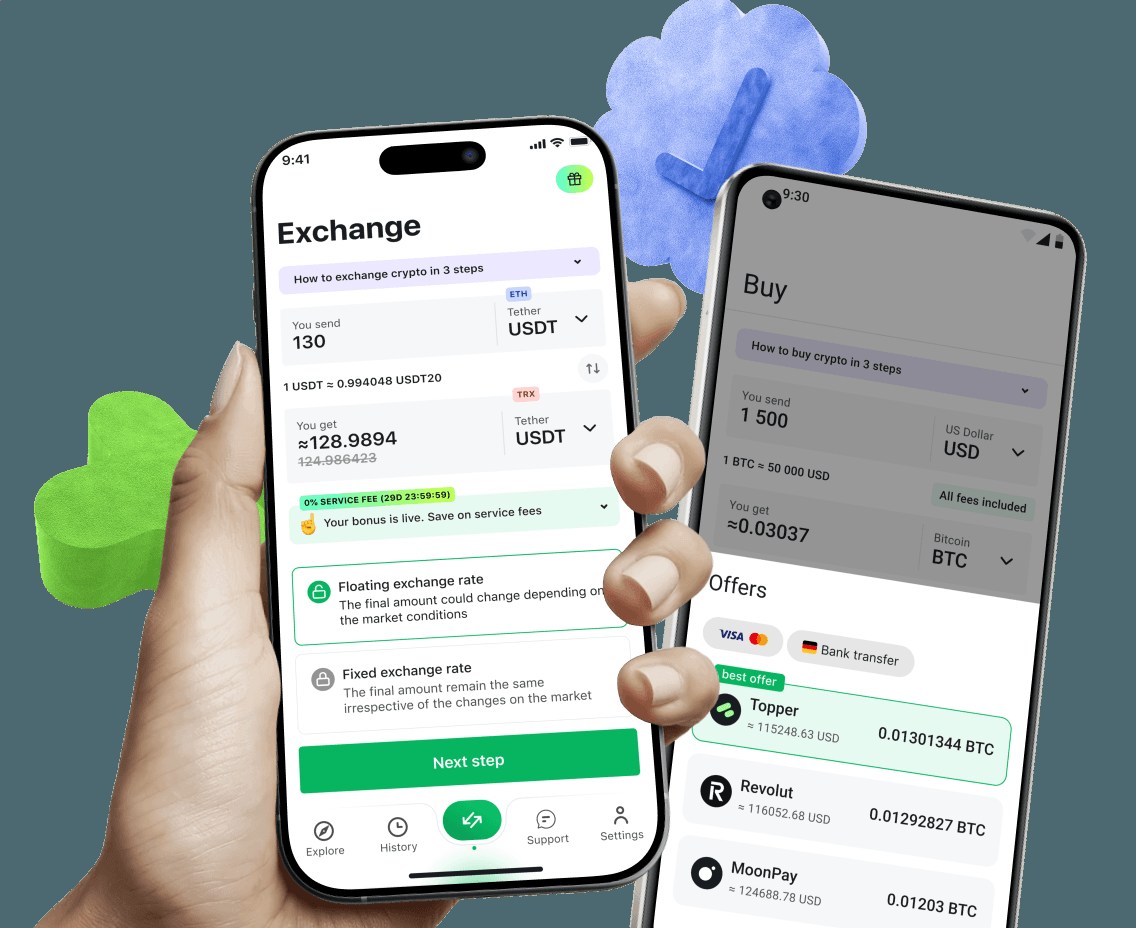
A floating quote follows the market until the exchange executes, so the received amount changes if prices move during confirmation. A fixed quote locks the displayed amount for the stated window and carries the cost of that certainty in the rate. Changelly exchange is strongest when the user understands that distinction before sending funds, especially during volatile BTC, ETH, or XRP markets.
Coins, networks, and asset labels that need attention
The catalog spans Bitcoin, Ethereum, XRP, Cardano, Solana, stablecoins, and many altcoins, with support advertised across more than 1000 digital assets. That breadth is useful, but it creates one practical responsibility: the ticker alone does not always identify the transfer network. A token available on Ethereum, BNB Chain, Polygon, or another network must be sent and received on the route shown in the transaction details.
This is where slow, precise reading saves trouble. XRP uses destination tags on some wallet and exchange deposits. Some stablecoins exist on multiple chains. Wrapped or bridged versions of an asset differ from the native coin. Before using Changelly exchange for an unfamiliar token, the receiving wallet must support that exact asset and network combination.
Buy, sell, and exchange modes in one service
The main exchange flow handles crypto-to-crypto swaps, while the broader product also includes buying and selling routes. Card purchases bring fiat on-ramps into the same experience, so a user can move from a payment card into Bitcoin or another supported asset when that option is available for the selected region and payment method. The app extends that access to mobile users and supports multiple languages.
Crypto-to-crypto swaps remain the cleanest use case. They avoid the extra checks, card processing rules, and regional limits tied to fiat payments. Someone holding BTC who wants ETH, or holding ETH who wants ADA, only needs a wallet that controls the sending funds and a compatible address for the asset being received.
Fees, network costs, and the final amount
The displayed quote combines the market rate with the service route and expected transaction economics. Network fees still matter because blockchains charge for settlement. Bitcoin miner fees, Ethereum gas, XRP transaction costs, and token transfer fees on account-based chains all affect the total path from outgoing payment to incoming deposit.
Users should read the quote as the working trade estimate, then compare it with the amount they expect to send from their wallet. During busy network periods, confirmations take longer and costs rise. Changelly exchange states an average transaction speed of 5 to 40 minutes, but the actual wait follows blockchain confirmation time, liquidity execution, and correct payment details.
Support and status updates during a pending exchange
A transaction is not finished the moment funds leave the sending wallet. The outgoing transfer must confirm, the exchange route must complete, and the receiving asset must settle to the destination address. The status page or transaction record gives the user the best view of that path, especially when a network is congested or the payment was sent close to the quote window.
Round-the-clock live support is part of the official service positioning, and that matters for payment mistakes, delayed confirmations, missing destination tags, and questions about transaction status. Changelly exchange has operated since 2015, so its support model is built around a wide mix of wallets, chains, and user experience levels.
When this instant swap model is the right fit
The service makes sense when speed and simplicity matter more than advanced exchange controls. It suits direct asset rotation, wallet portfolio cleanup, access to long-tail altcoins, and small to medium swaps where the user values a guided payment flow over charting tools. The experience is closer to a currency exchange counter than a professional trading screen.
Advanced traders still benefit from order books, depth charts, stop orders, and maker-taker fee control on centralized exchanges such as Kraken, Coinbase, or Binance. Decentralized exchange aggregators serve users who prefer on-chain wallet signatures and DeFi liquidity pools. Changelly exchange occupies the middle ground: simple input fields, broad asset coverage, and partner-routed execution.
How to prepare your first transaction
A first swap works best when the user chooses a liquid pair, starts with a modest amount, and checks every address field before sending funds. The sending wallet must hold enough of the outgoing asset to cover the transfer. The receiving wallet must support the incoming asset and the exact network shown in the exchange instructions.
- Choose the pair and confirm the ticker, network, and amount.
- Decide whether a fixed or floating quote fits the market conditions.
- Paste the destination address and tag or memo if the asset requires one.
- Send the outgoing payment from a wallet you control.
- Track confirmations until the received asset arrives.
Once those basics are clear, Changelly exchange becomes a straightforward tool for moving between major coins and altcoins without building a full trading setup. Its main strengths are asset coverage, a guided swap interface, partner rate discovery, mobile access, and support availability. Its main risk is user input accuracy: the wrong network, address, or missing tag turns a simple exchange into a recovery problem.
Changelly exchange: questions and answers
How long does a Changelly swap take after payment is sent?
The service lists an average exchange time of 5 to 40 minutes, and the real timing follows the outgoing blockchain confirmation, liquidity execution, and receiving-chain settlement. Bitcoin and Ethereum transfers slow down during busy network periods, while faster chains settle sooner. A pending transaction record is normal while confirmations accumulate and the swap route finishes.
Do I need an account to exchange crypto with this service?
A basic crypto-to-crypto flow starts with the exchange pair, destination address, and payment from a wallet. Some transactions require additional checks under compliance rules, especially where fiat payment methods, risk controls, or large transfers are involved. Users should be ready to provide accurate transaction information if support or the exchange process requests it.
What happens if I send the right coin on the wrong network?
Sending an asset on the wrong network creates a serious recovery issue because the receiving route expects a specific chain. For example, a token version on BNB Chain differs from a token version on Ethereum. Support can review the transaction details, but recovery depends on the asset, network, wallet infrastructure, and whether the funds reached an address the service can technically access.
Which wallets work best for receiving swapped crypto?
A suitable wallet is one that supports the exact incoming asset and network shown in the exchange details. Hardware wallets, mobile wallets, and exchange deposit addresses all work when they provide the correct format, tag, memo, or network option. For XRP and some other assets, the destination tag or memo is just as important as the address.
Can I buy Bitcoin with a card through the same service?
Yes, card-based buying is part of the broader product experience, so users can purchase Bitcoin and selected other assets through supported payment routes. Card availability follows region, payment provider, asset, and compliance requirements. Crypto-to-crypto swaps use a different flow because the user pays from an existing wallet rather than from a card checkout.
Fees on Changelly transactions include what costs?
The final transaction economics include the quoted exchange rate, the route used for the swap, and blockchain network costs. Network fees are paid to the relevant chain validators or miners, not as a separate trading feature. A fixed-rate quote prioritizes amount certainty during its window, while a floating-rate quote tracks market movement until execution.
Is Changelly better than using Coinbase or Kraken for a simple swap?
It is better for a user who wants a direct wallet-to-wallet exchange without using a full trading screen. Coinbase and Kraken provide account-based exchange tools, order books, fiat balances, and broader trading controls. The instant swap route is simpler for quick asset conversion, while major centralized exchanges are stronger for recurring trading, order management, and deep account services.