Changelly exchange is an instant swap route across 20+ markets
In short: Instant crypto swap service for trading Bitcoin and 1,000+ altcoins, using 20+ trading platform partners to compare rates.
Changelly exchange is an instant crypto swap service that compares liquidity from more than 20 trading platform partners, quotes Bitcoin and 1,000+ altcoins, and sends the exchanged coins straight to the wallet address you provide. Its core appeal is speed: a typical swap settles in about 5 to 40 minutes, with rate options that suit users moving between BTC, ETH, XRP, ADA, SOL, stablecoins, and smaller altcoins.
What the exchange screen is built to do
The main workflow is deliberately narrow. You choose the asset you are sending, choose the asset you want back, enter the receiving wallet address, and send the deposit to the address generated for the order. The service handles the routing, pricing, and payout step after the incoming transaction receives enough network confirmations.
That makes Changelly exchange useful when the goal is a wallet-to-wallet conversion rather than an account-based trading session. A user holding BTC in a hardware wallet, for example, uses it to receive ETH or ADA at a fresh address without building an order book position, managing limit orders, or moving funds through a long trading interface.
How the 20+ market-partner model shapes quotes
Changelly draws prices from a set of trading platform partners instead of relying on a single internal venue. When a pair is requested, it checks available routes and presents a rate for the requested direction. This matters most for thin altcoin pairs, where liquidity depth, spreads, and network withdrawal conditions change the final quote quickly.
The route does not turn every coin into a deep market. It gives the service more places to source an exchange rate, which improves the odds of finding a usable quote for major assets and many long-tail tokens. BTC, ETH, XRP, ADA, and similar high-volume coins tend to have more consistent availability than small assets with limited listings.
Fixed rate and floating rate choices
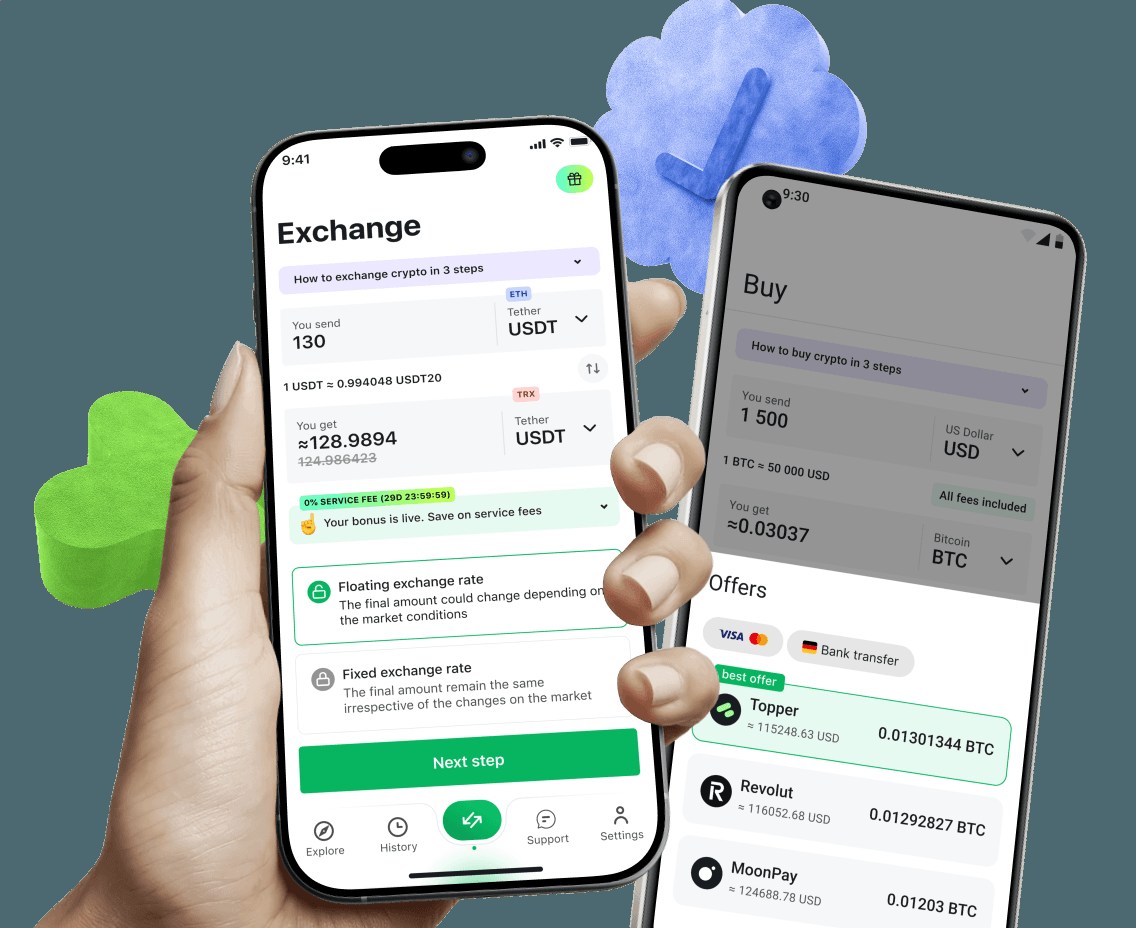
A fixed-rate order locks the quoted output for a short window, so the user knows the expected receive amount before sending the deposit. That structure suits swaps where price movement would create an unwanted surprise, especially during volatile market sessions. The tradeoff is that the quoted rate includes room for execution risk during the lock period.
A floating-rate order follows the market at execution time. The final amount changes with liquidity, price movement, and the moment the deposit clears. Floating quotes appeal when the user accepts market movement in exchange for a rate that tracks current conditions more closely. Changelly exchange presents these choices so the user selects the swap style before committing funds.
The 5 to 40 minute timing window in real use
The service advertises an average transaction speed of 5 to 40 minutes, but the timer is tied to blockchain behavior as well as routing. A Bitcoin deposit waits for confirmations, an Ethereum payout depends on gas conditions, and a token on a busy chain waits behind that network's current traffic. The visible order status matters because it separates deposit detection from the final outgoing transfer.
Fast swaps happen when the sending chain confirms quickly, liquidity is available, and the destination network processes withdrawals without delay. A slower order does not always mean the exchange route failed; it often means the deposit chain, the payout chain, or a partner-side withdrawal queue is taking longer than the average case.
Wallet addresses, networks, and memo fields
The most important user-controlled detail is the destination address. For assets such as XRP, XLM, and some exchange-deposited coins, a tag or memo field belongs with the address. Leaving out a required tag sends funds to the right platform address but without the identifier needed to credit the account automatically.
Network selection carries the same weight. USDT on Ethereum, TRON, BNB Chain, and other networks represents different transfer rails, even when the ticker looks familiar. Changelly exchange routes the order around the asset and network selected on the screen, so the sending wallet and receiving wallet must match that network exactly.
Buying, selling, and swapping from the same brand
The exchange flow focuses on crypto-to-crypto conversion, while the broader Changelly product set also supports buying and selling crypto through payment providers. Card purchases involve additional checks from the payment partner, card issuer, and regional rules. A swap between two wallet assets is a different workflow from buying BTC or ETH with a card.
Separating those actions keeps expectations clear. A crypto swap starts with an on-chain deposit and ends with an on-chain payout. A card purchase starts with fiat payment details and identity checks where required. The user experience is similar on the surface, but the parties involved and the reasons for delay differ.
Where the app adds convenience
The mobile app gives frequent users a cleaner way to repeat the same workflow, monitor order status, and reach support. Changelly highlights availability in 12 languages and an average 4.7 rating across major app stores, which matters for users who prefer a phone-first exchange process instead of copying addresses between browser tabs.
Small-screen convenience does not remove the need to inspect addresses. The strongest habit is to paste, compare the first and last characters, confirm the network, and then send the exact deposit amount shown for the order. That check is especially valuable when using QR codes, address books, or wallets with multiple networks enabled.
Costs a user actually feels during a swap
The price shown to the user blends several cost components. Some are visible as fees, while others appear inside the quoted exchange rate. Network fees also affect the transfer leaving the sender's wallet and the payout transaction on the receiving chain. During high congestion, the chain fee becomes a larger part of the total cost for smaller swaps.
A useful way to read the quote is to compare the expected output against a live market reference and then consider the convenience of avoiding a full trading account workflow. Changelly exchange is strongest when speed, asset coverage, and wallet-to-wallet delivery matter more than squeezing every basis point from an order book.
When another route fits better
Centralized exchanges such as Coinbase, Kraken, and Binance suit users who want advanced order types, recurring purchases, deep fiat rails, or long account histories. Decentralized exchanges such as Uniswap and PancakeSwap fit users swapping directly from self-custody wallets on a specific chain, especially when they understand slippage, token approvals, and liquidity pools.
In practice, Changelly exchange fits between those patterns. It offers a simple quote-and-send flow without requiring the user to navigate liquidity pools or maintain an active trading dashboard. The better route depends on the asset pair, chain fees, regional payment access, and whether the user values a direct wallet payout over a venue account balance.
A clean first swap workflow
Before sending funds, decide whether the order needs rate certainty or market-following execution. Then choose the pair, confirm the receiving wallet supports the exact coin and network, and review any memo or tag requirement. The deposit should come from a wallet you control well enough to send the exact asset on the selected chain.
- Choose the send asset and receive asset from the exchange screen.
- Select fixed or floating pricing based on your tolerance for price movement.
- Paste the destination address and required memo or tag.
- Send the exact deposit amount to the generated order address.
- Track the order until the payout transaction is broadcast.
For a first use, a modest test swap teaches the timing and address flow without creating unnecessary pressure. Once the pattern is familiar, Changelly exchange becomes a practical tool for moving between widely held coins and less common altcoins from a single, streamlined interface.
Before you start with Changelly exchange
Fees on Changelly swaps: where do they show up?
Swap costs appear in the quoted rate, the service fee structure for the chosen order type, and the blockchain network fees attached to the deposit and payout transactions. Smaller swaps feel network fees more sharply because a fixed chain fee takes a larger share of the total. Comparing the expected receive amount with a live market reference gives the clearest view of the all-in cost.
Can I swap small altcoins as easily as BTC or ETH?
Major assets such as BTC, ETH, XRP, ADA, and SOL have deeper liquidity and more consistent routing. Smaller altcoins work when a supported pair and partner liquidity are available, but spreads and availability change faster. For thin assets, review the quoted output, minimum amount, network fee, and destination wallet support before sending the deposit.
How long does a Changelly swap take after I send the deposit?
The advertised average is about 5 to 40 minutes, but the actual timing follows the sending chain, the destination chain, and the availability of the exchange route. Bitcoin confirmations, Ethereum gas congestion, and partner withdrawal queues all change the wait. The order status normally moves through deposit detection, exchange processing, and payout broadcast before the coins arrive.
Do I need an account to make a crypto-to-crypto exchange?
A straightforward crypto-to-crypto swap is built around the order, the deposit address, and the payout wallet. Some flows ask for an account or additional checks when risk controls, payment partners, regional rules, or transaction characteristics require them. Card purchases and sell orders involve different providers and create more account-related steps than a standard wallet-funded swap.